
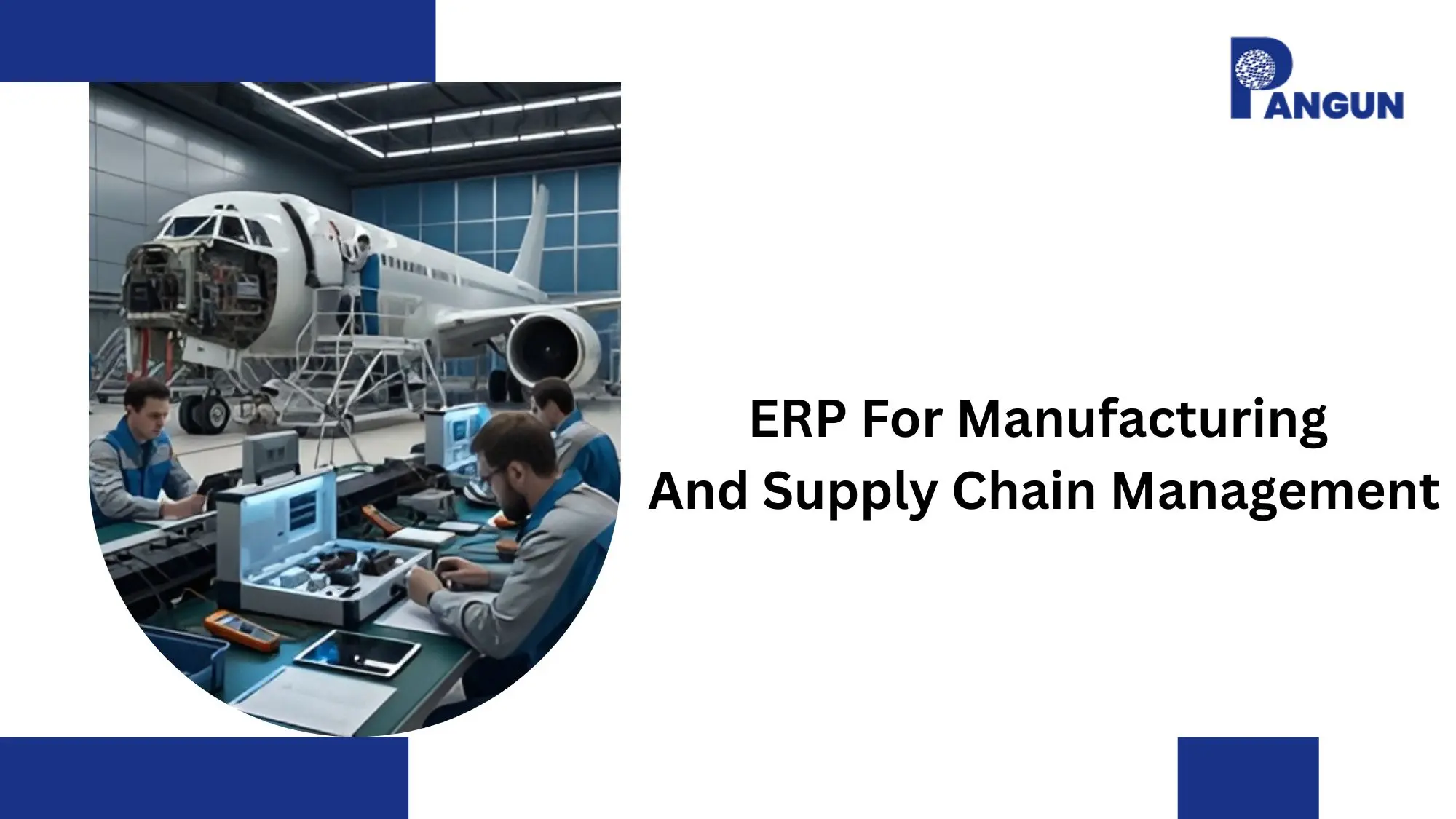
Manufacturing leaders today face a simple but critical challenge: how to gain real visibility across production, procurement, inventory, and logistics at the same time. The answer lies in ERP for manufacturing and supply chain management, which connects every stage of production and distribution into one integrated digital system. An advanced erp system gives decision makers a clear view of materials, orders, inventory, vendors, and production status across the entire supply chain, allowing organizations to respond faster, reduce delays, and maintain operational control.
For manufacturing company founders, plant managers, procurement leaders, and aerospace or defense executives, this visibility is not just helpful. It is essential. Modern industries operate with complex vendor networks, multi-location production units, and global logistics dependencies. Without an integrated supply chain management approach powered by ERP, companies often struggle with fragmented information and slow decision-making.
This guide explains how erp for manufacturing and supply chain management enables end-to-end visibility, improves supply chain performance, and supports reliable production operations across critical industries in India.
Understanding ERP in Manufacturing and Supply Chain Management
ERP stands for enterprise resource planning, a centralized digital platform that connects business operations, production activities, financial management, and supply chain management into one integrated system.
An erp system is not just a basic software tool. It is a strategic operational framework that helps organizations manage information and processes across departments. In manufacturing companies, this includes production scheduling, procurement planning, inventory management, logistics coordination, and customer order tracking.
When companies rely on disconnected tools, spreadsheets, and manual updates, the supply chain becomes difficult to monitor. Materials may be delayed, stock levels become inaccurate, and production schedules may not align with actual demand.
A modern erp platform solves this challenge by creating a single source of truth for data. With one integrated software system, every department works with real-time information.
This is why erp in supply chain management has become essential for manufacturing industries that depend on predictable material flow and timely delivery.
Why End-to-End Supply Chain Visibility Matters
End-to-end visibility across the supply chain allows organizations to track materials, production progress, inventory levels, and shipments in real time.
Manufacturing businesses depend on smooth coordination between vendors, warehouses, factories, and distributors. Without visibility, companies face several operational risks:
- Delays in raw material delivery
- Production interruptions
- Overstocking or stock shortages
- Inaccurate demand forecasting
- Lack of traceability
These problems directly impact supply chain efficiency and profitability.
With a strong erp system for supply, companies can monitor supply chain activities from procurement to delivery. Decision makers gain insights into the entire supply chain, helping them respond quickly when disruptions occur.
The Role of ERP in Supply Chain Management
The role of erp in supply chain management is to connect supply chain planning, procurement, production, inventory, logistics, and financial reporting into a unified platform.
An integrated erp supply chain management framework helps organizations manage complex operations with accuracy.
ERP supports multiple supply chain management functions, including:
- Procurement planning
- Production scheduling
- Warehouse management
- Logistics coordination
- Order tracking
- Supplier management
- Financial reconciliation
By connecting these operations, ERP and supply chain management work together to provide visibility across the supply chain.
This approach allows companies to monitor supply chain processes continuously and make informed decisions.
How ERP Improves Supply Chain Management
ERP improves supply chain management by integrating data, automating workflows, and providing real-time insights into operations.
When organizations use ERP in supply chain, they gain access to centralized information that connects procurement, manufacturing, and distribution.
Real-Time Supply Chain Data
An integrated erp platform collects and updates supply chain data and processes in real time. This allows managers to track:
- Vendor deliveries
- Inventory levels
- Production schedules
- Shipment status
Because the erp system stores accurate information, teams can avoid errors caused by outdated spreadsheets.
Demand and Supply Coordination
Effective supply chain planning requires balancing supply and demand. ERP tools help organizations analyze historical demand, current orders, and inventory levels to plan production more effectively.
With a strong manufacturing erp system, production managers can align factory output with real market demand.
Integrated Order Management
Customer demand flows through the system via order management modules. These modules allow companies to track orders from quotation to dispatch.
Because ERP integrates production planning with customer demand, manufacturing companies can respond faster to market changes.
Inventory Optimization
One of the biggest advantages of erp for manufacturing and supply chain management is better inventory management.
ERP ensures accurate stock records by automatically updating inventory when materials are received, used in production, or shipped to customers.
This helps reduce excess inventory while preventing shortages.
ERP and Manufacturing Operations: A Strong Connection
Manufacturing companies depend on precise coordination between materials, machinery, and labor. An integrated manufacturing erp environment connects production processes with supply chain management.
This integration helps organizations manage:
- Production planning
- Material allocation
- Work order tracking
- Quality checks
- Vendor coordination
ERP ensures that manufacturing operations align with procurement schedules and customer demand.
For manufacturing companies, this connection is critical for maintaining operational stability.
Key ERP Capabilities That Enhance Supply Chain Visibility
Modern ERP systems include powerful management capabilities designed to enhance supply chain management.
Procurement and Supplier Coordination
ERP tracks supplier orders, delivery schedules, and purchase approvals. This ensures smoother coordination with vendors.
Better procurement visibility improves supply chain management efficiency and reduces delays.
Warehouse and Distribution Management
ERP supports warehouse management by tracking stock movement between warehouses, production facilities, and distribution centers.
This capability is essential for manufacturing and distribution operations that operate across multiple locations.
Asset Management
Production equipment and machinery require monitoring and maintenance. ERP supports asset management, ensuring that production assets remain operational.
This reduces unexpected downtime and protects supply chain continuity.
Financial Integration
A strong ERP platform integrates financial management with operational processes. Every purchase order, production activity, and shipment automatically reflects in financial records.
This provides transparency for decision makers.
ERP Systems Help Businesses Improve Supply Chain Performance
ERP systems help businesses improve supply chain performance by aligning production planning, procurement activities, and logistics operations within one digital ecosystem.
Because ERP connects departments, companies gain greater supply chain coordination.
For example:
- Procurement teams see production demand forecasts.
- Production teams see material availability.
- Logistics teams track delivery schedules.
This collaboration improves supply chain efficiency and operational reliability.
Benefits of Using ERP for Manufacturing and Supply Chain Management
Organizations adopting ERP experience measurable improvements in operations.
Increased Supply Chain Efficiency
ERP reduces manual processes and improves coordination throughout the supply chain.
Better Production Planning
ERP connects demand forecasting with production scheduling.
Improved Traceability
Companies gain visibility across the entire supply chain, allowing them to trace materials and finished goods.
Stronger Decision Making
Real-time dashboards help leaders evaluate supply chain performance and operational metrics.
These advantages represent the benefits of using ERP in modern manufacturing environments.
ERP Implementation in Manufacturing Companies
ERP implementation involves analyzing business processes, configuring the system, migrating data, training employees, and deploying the system in phases.
Successful implementing an erp system requires careful planning and cross-department collaboration.
The key stages include:
- Process analysis
- System configuration
- Data migration
- Testing and validation
- User training
When companies focus on proper erp implementation, they achieve smoother adoption and faster return on investment.
ERP Systems and Supply Chain Management in Critical Industries
Industries such as aerospace, defense manufacturing, automotive, and heavy engineering require strict coordination across complex supply chain operations.
In these sectors, ERP systems support:
- Multi-level production structures
- Compliance documentation
- Quality inspection workflows
- Vendor qualification tracking
ERP systems can provide the visibility required to maintain reliability across complex manufacturing processes.
This is why erp for supply chain operations has become essential for critical manufacturing sectors.
How ERP Enhances Supply Chain Management Efficiency
ERP systems bring transparency to every aspect of supply chain operations.
They allow organizations to:
- Monitor supplier performance
- Analyze demand patterns
- Track material availability
- Coordinate logistics activities
These capabilities help companies enhance supply chain performance and maintain stable production environments.
ERP also supports planning and supply chain management by providing forecasting tools and operational analytics.
Why ERP Is Essential for the Future of Manufacturing?
Manufacturing industries require ERP systems to streamline production planning, scheduling, and execution while managing subcontracting and quality control effectively. ERP ensures accurate inventory and stock management aligned with production needs and delivery timelines.
It integrates manufacturing with supply chain operations for better coordination and visibility. This improves efficiency, reduces delays, and enables faster, more reliable decision-making in dynamic manufacturing environments.
Why Pangun ERP Is Built for Manufacturing and Supply Chain Visibility
For manufacturing companies that require deep operational visibility, Pangun provides advanced ERP capabilities designed for complex production environments.
Pangun offers a comprehensive erp software for the manufacturing industry that integrates production, procurement, quality management, and supply chain management into one unified platform.
The erp system helps organizations manage supply chain planning and execution, improve inventory tracking, and streamline procurement workflows. By connecting manufacturing operations with supply chain data, Pangun enables real-time visibility across the supply chain.
Manufacturing companies benefit from improved operational control, stronger traceability, and better coordination throughout the supply chain.
Final Thoughts: Achieving End-to-End Manufacturing & Supply Chain Visibility across Critical Industries with Pangun ERP
Modern industries rely on seamless coordination between procurement, production, logistics, and finance to operate efficiently. Without real-time visibility, manufacturing & supply chains become fragmented, leading to delays and inefficiencies.
An integrated ERP system addresses this by connecting departments, automating workflows, and delivering real-time insights across manufacturing and supply chain operations. It ensures better control over production, inventory, and distribution processes.
For organizations across critical industries in India, adopting ERP for manufacturing and supply chain management is a strategic necessity to enhance operational control and adaptability.
If your business aims to improve visibility, strengthen manufacturing & supply chain performance, and drive operational excellence, implementing a robust ERP platform is essential. Connect with Pangun to explore solutions designed to streamline manufacturing and enable complete end-to-end visibility.