
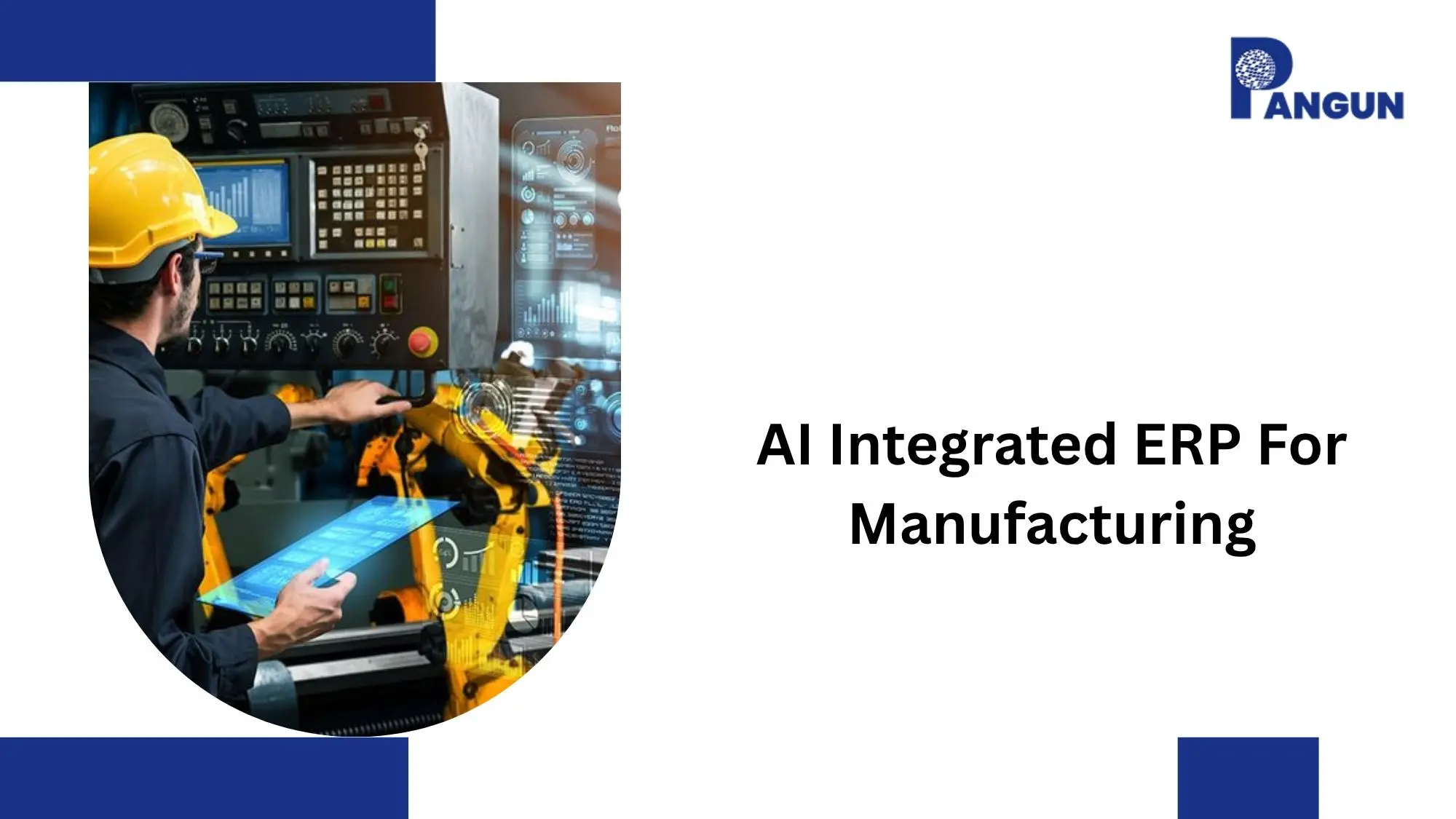
If you are looking to improve efficiency, reduce operational delays, and gain real-time insights into your factory operations, the answer is clear: AI Integrated ERP for Manufacturing is shaping the future of smart manufacturing. By combining traditional erp system capabilities with ai and machine learning, businesses can move from reactive decision-making to predictive and intelligent operations. For manufacturers in Bangalore, this shift is not just an upgrade. It is becoming a necessity to stay competitive in modern manufacturing environments.
Manufacturing today is no longer just about machines and production lines. It is about data, intelligence, and speed. Companies that still rely on traditional erp systems are often limited to reporting what has already happened. In contrast, ai-powered erp systems can predict what will happen next and help teams act before problems occur.
What Is AI Integrated ERP for Manufacturing?
AI Integrated ERP for Manufacturing refers to an advanced enterprise resource planning system that combines core ERP functionalities with artificial intelligence to automate processes, analyze data, and improve decision-making.
At its core, erp refers to software that manages business functions like finance, procurement, production, and inventory. However, when ai technologies are integrated into erp, the system becomes more intelligent and proactive.
An ai-enabled erp system can:
- Analyze large volumes of data in real time
- Predict demand and production requirements
- Automate repetitive tasks using process automation
- Provide actionable insights through business intelligence
This evolution from basic erp to ai-driven erp systems is transforming how manufacturing companies operate.
Why Traditional ERP Systems Are No Longer Enough
Traditional ERP systems are limited because they focus on historical data rather than predictive insights.
Most erp systems were designed to store and process data. They help track inventory, manage orders, and generate reports. While these functions are important, they do not provide the agility required in today’s fast-paced manufacturing environments.
For example:
- A traditional system tells you that inventory is low
- An ai-powered erp system predicts when inventory will run out and suggests actions
This difference is critical.
In modern manufacturing, companies must respond quickly to changing demand, supply chain disruptions, and production challenges. Without ai in erp systems, decision-making becomes slower and less effective.
How AI Transforms ERP in Manufacturing
AI transforms ERP by adding intelligence, automation, and predictive capabilities to core business processes.
The integration of ai within ERP enables systems to go beyond simple data management.
Predictive Analytics for Better Decision-Making
Predictive analytics into ERP systems allows manufacturers to forecast demand, optimize production planning, and reduce waste.
Using ai algorithms, ERP systems analyze historical data and current trends to predict future outcomes. This helps in:
- Accurate production planning
- Demand forecasting
- Resource allocation
This is one of the most powerful ai capabilities in manufacturing.
Automation of Routine Tasks
ERP systems can automate routine tasks using AI and robotic process automation.
Tasks such as:
- Data entry
- Invoice processing
- Order updates
can be handled automatically. This reduces manual effort and improves efficiency.
AI and automation together ensure that teams can focus on strategic activities instead of repetitive work.
Intelligent Inventory Management
AI-enabled ERP helps improve inventory management by predicting stock levels and optimizing procurement.
Instead of reacting to shortages, companies can plan ahead. This improves supply chain management and reduces holding costs.
Enhanced Supply Chain Visibility
AI-powered ERP systems improve supply chain visibility and coordination.
With real-time insights, companies can:
- Track supplier performance
- Identify delays early
- Optimize logistics
This ensures smoother supply chain operations.
Key Benefits of AI Integrated ERP for Manufacturing
AI Integrated ERP for Manufacturing brings measurable improvements by combining intelligence, automation, and real-time insights into everyday operations.
For manufacturing businesses, the real value of an erp system increases when it is powered by ai. Instead of just tracking data, the system starts guiding decisions, predicting outcomes, and improving efficiency across departments. Let’s look at the key benefits in detail.
Improved Operational Efficiency
AI-driven automation improves operational efficiency by reducing manual effort and streamlining workflows across manufacturing operations.
In many factories, teams spend significant time on repetitive tasks like data entry, reporting, and process coordination. With ai-powered erp, these activities are automated, allowing faster execution and fewer errors. This not only speeds up day-to-day operations but also ensures better consistency across departments. Over time, this leads to smoother production cycles and higher overall productivity.
Better Decision-Making
AI enables faster and more accurate decision-making by providing real-time insights and predictive analytics within the ERP system.
Instead of relying only on past reports, managers can access live data and future forecasts. For example, ai in erp systems can predict demand trends, identify potential bottlenecks, and suggest corrective actions. This helps leaders make confident decisions quickly, especially in dynamic manufacturing environments where timing is critical.
Reduced Costs
AI-powered ERP helps reduce operational costs by optimizing resource usage and minimizing waste across processes.
By analyzing patterns in production and inventory, ai-enabled erp systems can identify inefficiencies such as overproduction, excess stock, or underutilized resources. Automation also reduces dependency on manual processes, lowering labor costs and minimizing errors. These improvements contribute to better cost control and improved profitability.
Increased Flexibility
AI makes ERP systems more flexible by enabling them to adapt to changing business conditions and production requirements.
Manufacturing environments often face sudden changes in demand, supply chain disruptions, or production constraints. An ai-driven erp system can quickly adjust plans based on real-time data, helping organizations respond effectively. This flexibility allows businesses to stay agile and maintain performance even in uncertain conditions.
Enhanced Quality Control
AI improves quality control by detecting anomalies and identifying potential issues in manufacturing processes before they escalate.
Through continuous monitoring and data analysis, ai-powered erp systems can flag deviations in production parameters, equipment performance, or output quality. This allows teams to take corrective action early, reducing defects and ensuring consistent product standards. Over time, this strengthens overall product quality and customer satisfaction.
Role of AI in Supply Chain Management
AI plays a crucial role in improving supply chain management within ERP systems.
By analyzing data across the supply chain, AI helps:
- Predict demand fluctuations
- Optimize inventory levels
- Improve supplier coordination
This ensures efficient and reliable operations.
AI in Manufacturing ERP: Real-World Impact
AI in manufacturing ERP is already transforming how companies operate in real-world environments.
In Bangalore, many manufacturing companies are adopting ai-powered erp solutions to stay competitive.
These systems help:
- Reduce downtime
- Improve production efficiency
- Enhance decision-making
This is why ai-powered erp is transforming manufacturing across industries.
AI Technologies Driving Smart Manufacturing
Smart manufacturing is being shaped by advanced AI technologies that bring intelligence, speed, and automation into everyday operations within ERP systems.
Today’s AI Integrated ERP for Manufacturing is not built on a single capability. It combines multiple ai technologies that work together to improve decision-making, automate processes, and enhance efficiency across the factory floor and supply chain.
Instead of just collecting data, these technologies help erp systems understand patterns, predict outcomes, and recommend actions. Let’s explore the key technologies driving this transformation.
Machine Learning
Machine learning enables ERP systems to learn from historical and real-time data, improving accuracy and decision-making over time.
In a manufacturing environment, data is generated continuously from machines, production lines, and supply chain activities. Machine learning uses this data to identify patterns and trends that may not be visible through traditional analysis.
For example, an ai-powered erp system can analyze past production data to predict future demand or identify potential delays. It can also improve forecasting accuracy and optimize inventory management. As more data is processed, the system becomes smarter, helping organizations make better decisions with greater confidence.
Generative AI
Generative AI enhances ERP capabilities by assisting with planning, reporting, and intelligent decision support.
Unlike traditional systems, generative ai can create insights, summaries, and recommendations based on available data. Within ERP, it can help generate production plans, create reports, and even suggest improvements in workflows.
For managers and decision-makers, this means less time spent analyzing data manually and more time focusing on strategy. It also improves business intelligence by turning complex data into simple, actionable insights that support faster decision-making.
Robotic Process Automation (RPA)
Robotic Process Automation helps ERP systems automate repetitive and rule-based tasks, improving efficiency and reducing errors.
In manufacturing operations, many processes such as order processing, invoice generation, and data entry are repetitive. Robotic process automation handles these tasks automatically within the ERP platform.
When combined with ai and automation, RPA ensures that routine operations are completed quickly and accurately. This reduces manual workload, minimizes errors, and allows teams to focus on higher-value activities like process improvement and innovation.
Together, these AI technologies are transforming ERP from a data management tool into an intelligent system that supports smart manufacturing and drives operational excellence.
Challenges in Implementing AI Integrated ERP
Implementing AI in ERP systems comes with challenges that organizations must address.
Common challenges include:
- Data quality issues
- Integration complexity
- Employee training
However, with the right approach, these challenges can be managed effectively.
Why Bangalore Manufacturers Are Moving Toward AI ERP
Bangalore is a hub for innovation and smart manufacturing.
Companies here are adopting ai-enabled erp systems to:
- Improve efficiency
- Stay competitive
- Meet global standards
This shift reflects the growing importance of intelligent systems in manufacturing industries.
Why Pangun Is the Right Choice for AI Integrated ERP
For manufacturing companies looking to adopt AI-powered ERP, Pangun offers advanced solutions tailored for modern manufacturing environments.
Pangun provides ai-powered manufacturing erp software that integrates core ERP functions with intelligent automation and analytics. Its platform helps businesses streamline operations, improve decision-making, and enhance productivity.
Final Thoughts: The Future Is Intelligent ERP
The future of manufacturing lies in intelligent systems that combine data, automation, and decision-making capabilities.
AI Integrated ERP for Manufacturing is not just a trend. It is a strategic necessity for companies that want to grow and remain competitive.
If you are ready to transform your manufacturing operations with AI-driven ERP, visit Pangun tech and connect with Pangun. Take the next step toward smarter, more efficient manufacturing with the power of AI and ERP combined.